Luke 6:25
"Woe to you who are full now, for you shall be hungry. Woe to you who laugh now, for you shall mourn and weep."
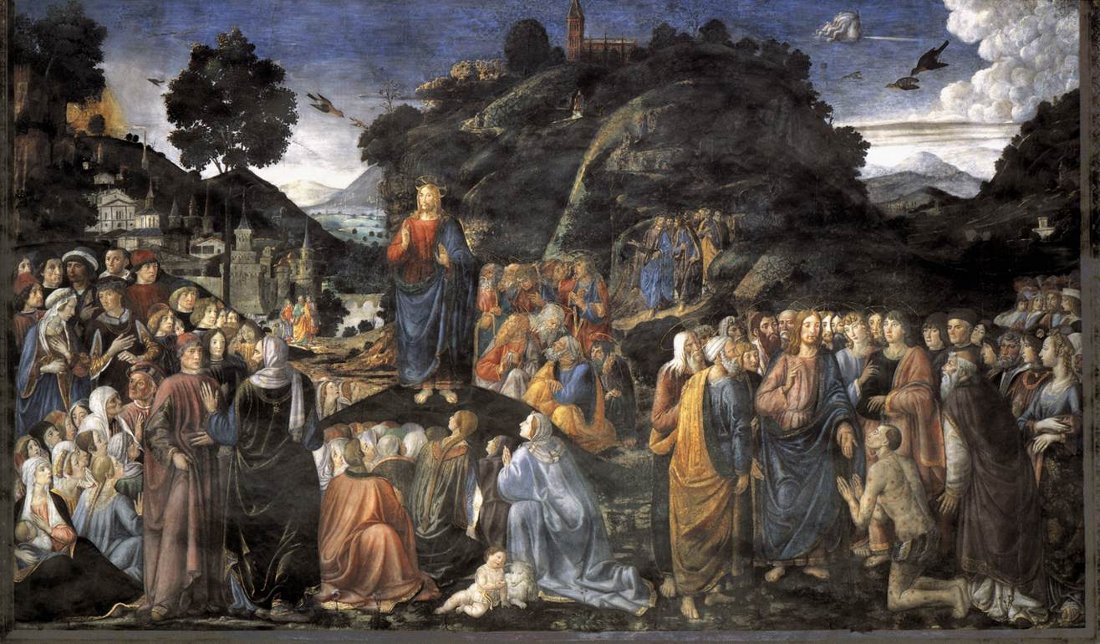
Cosimo Rosselli, Sermon on the Mount, fresco, c.1481-1482
Jesus preached the Sermon on the Plain after a night of praying on a mountainside and a morning spent choosing his 12 disciples (Luke 6). He delivered his sermon on level ground and the Sermon on the Plain’s message is grounded in real-life issues. It encourages the poor and disenfranchised in society and warns those more fortunate that their lives will change for the worse if they don’t change their ways. For example, Blessed are you who are poor, for yours is the kingdom of God (Luke 6:20); But woe to you who are rich, for you have already received your comfort (Luke 6:24). Luke recorded the Sermon on the Plain for a Gentile audience. The Gentile audience would not be as familiar with Jewish law and perhaps needed a more practical approach to the Christian life, as contained in the basic beatitudes and threatening woes of Luke’s recorded Sermon on the Plain.
Whether the two sermons were given on one occasion or over a longer period of time, is not certain. Disciples Matthew and Luke listened to Jesus’ teaching over the course of His ministry and recorded overlapping lessons in the two sermons; one-third of the material in the Sermon on the Mount is in the Sermon on the Plain. The formats of the two sermons are similar, with beatitudes—reading Blessed are the…—and parables. Matthew and Luke recorded in their gospels what they deemed the most important instructions for themselves and future Christians.