Job 5:22
At destruction and famine you shall laugh, and shall not fear the beasts of the earth.
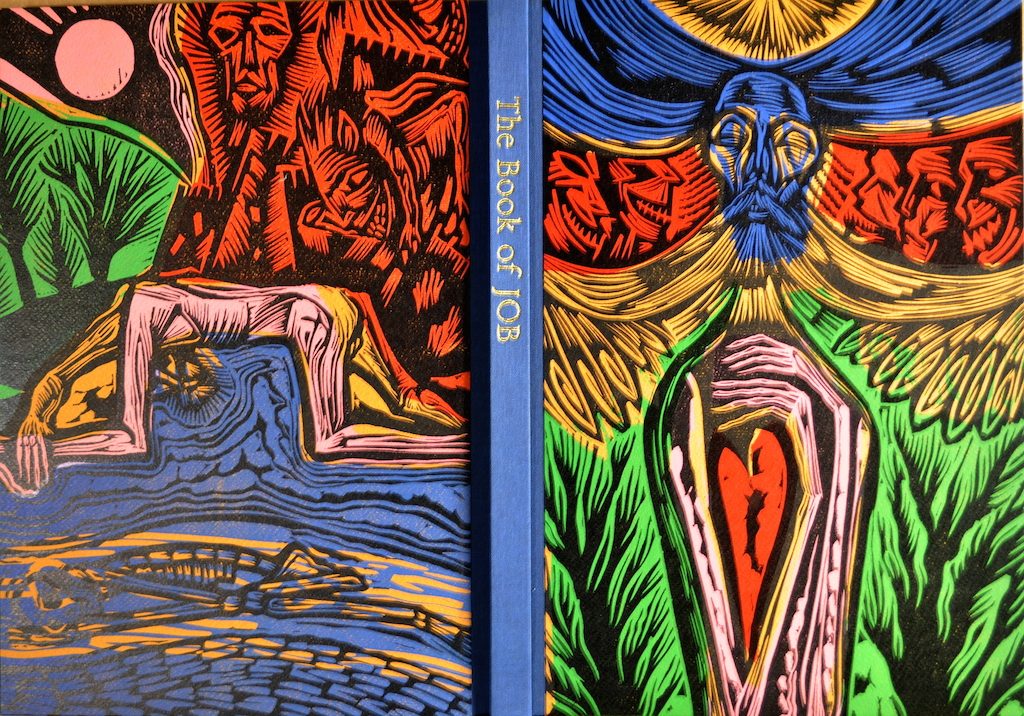
John Abell, The Book of Job, Linocut, Published in 2016. John Abell takes on the challenging narrative in linocut images throughout which express the harrowing events of a life being reduced to nothing from such comfortable heights and then suddenly reversed.
As the first poetic book of the English Bible, Job introduces the reader to the idea of Hebrew poetry, which involves the repetition and combination of ideas more than sounds. The author, date, and place of the Book of Job are all uncertain. It may be that Job himself recorded his experiences in the book, or there may well have been another anonymous author. Judging by the style of the Hebrew it uses, some scholars judge Job to be the oldest book of the Old Testament. The Book of Job is not primarily about one man’s suffering and pain; Job’s problem is not so much financial or social or medical; his central problem is theological. Job must deal with the fact that in his life, God does not act the way he always thought God would and should act. In this drama, the Book of Job is not so much a record of solutions and explanations to this problem; it is more a revelation of Job’s experience and the answers carried within his experience.